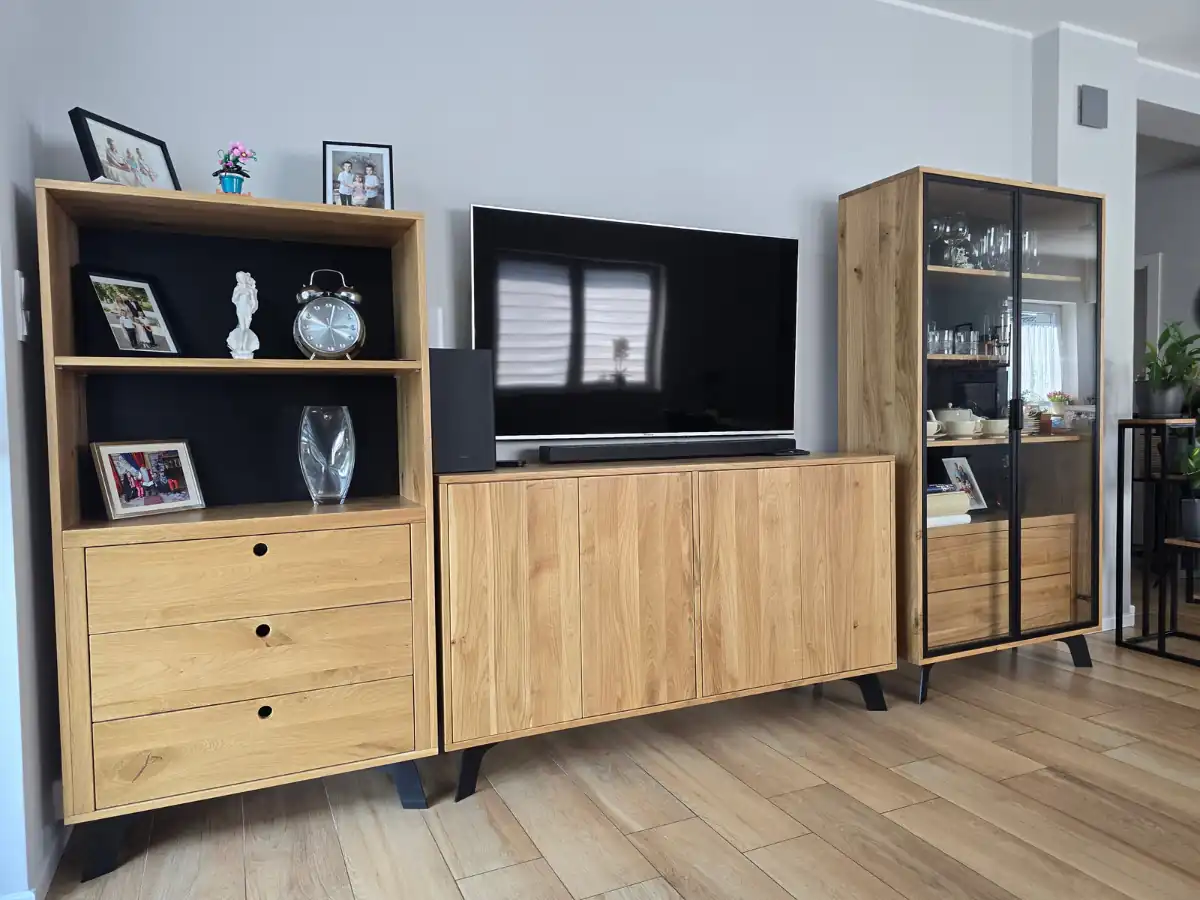
The living room is the easiest place to end up with visual chaos: different wood tones, random shapes, mismatched details, and a “mix-and-match” set of furniture from several styles. If you want an interior that feels calm, looks more expensive, and is simply pleasant to be in, follow one simple rule: one dominant material (oak) + one consistent design style.
In this guide, we present a practical framework for furnishing a living room with oak furniture—without the risk that something will feel “off”: from choosing a collection (VITA, MERIS, NESS, DELIO, NESCA), through selecting an oak table, to choosing the stain/finish and premium additions that create that “high-end” effect (NEMIR display cabinets and bars, and shelving units for showcasing decor). If you want to compare styles right away, start here: solid wood furniture collections.

Why is oak living room furniture one of the safest choices?
Solid oak furniture has an advantage in the living room for two key reasons: it’s durable (this is a heavily used space) and timeless (oak works with modern, loft, Scandinavian, and more classic interiors). Importantly, oak brings natural texture and “depth” to a room—so you don’t need to overcompensate with too many decorations. A well-chosen set is enough: an oak sideboard, an oak TV cabinet, a display cabinet or shelving unit, and a table that ties the living area together.
If you’re designing a combined living room and dining space, the table will be the strongest visual element. That’s why it’s worth starting with cohesive categories: oak dining tables, including extendable oak tables and tables with extension leaves. For unusual apartment layouts, custom-made tables are a great solution.
How to create a cohesive oak-based interior
3 rules that deliver a “premium” effect
A cohesive living room isn’t about making everything identical. It’s about repeating logical features (material, line, details). These three rules are enough in 90% of cases:
One base + one “partner” — oak as the base, plus at most one dominant “partner” next to it: black steel (loft/modern), glass (for a lighter display cabinet), or matte black in details (handles, lighting, frames).
Repeat the details — the same type of legs (metal/wood), similar block geometry, comparable tabletop thickness, and a similar opening system. This builds a high-quality impression faster than décor.
Keep the palette under control — 2–3 base colors (e.g., oak + warm white + a black accent) and one accent color (olive, caramel, graphite) in textiles.
Practical tip: if you’re combining several pieces on one wall (e.g., TV unit + display cabinet + sideboard), stick to one collection line. That way, even a stronger style (like loft) won’t look like a random mix.
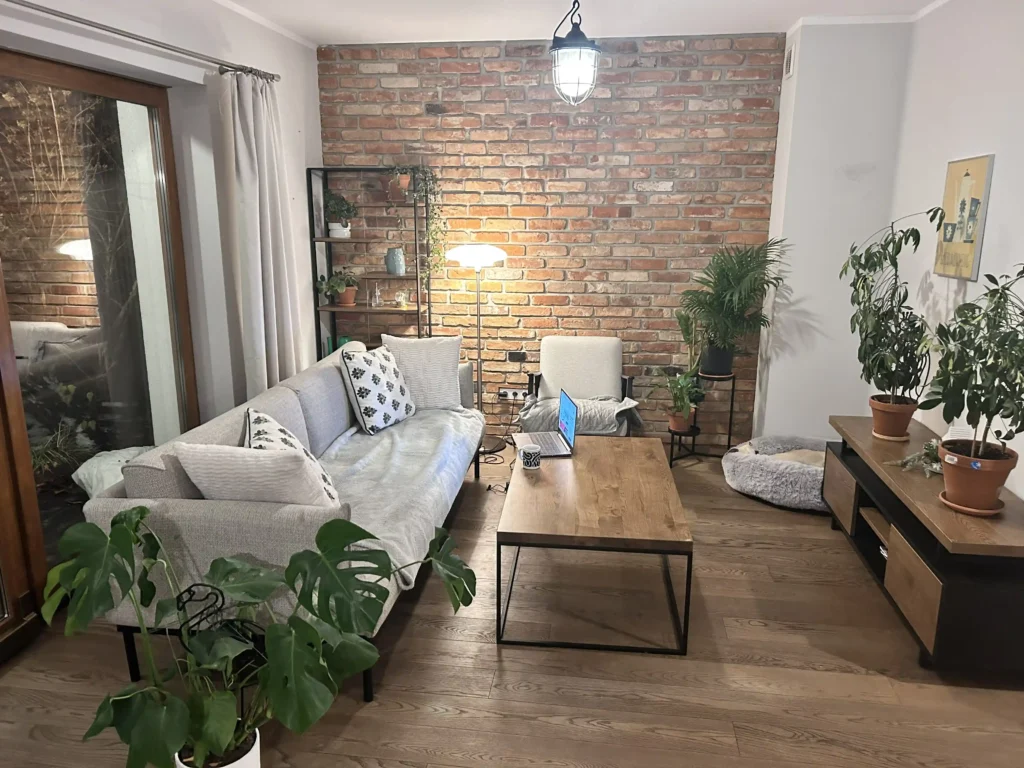
Choosing a collection: VITA, MERIS, NESS, DELIO, NESCA — how to match the style to your living room?
The simplest way to achieve a cohesive look is to build the living room “framework” within one collection. In practice: choose the core (sideboard + TV unit + shelving/display cabinet) first, and only then add the table and accessories. Below are short, practical tips on when each collection works best:
VITA (modern living room, minimalism)
If you like clean lines and a light, airy form, VITA helps keep the interior calm and modern. It’s a good direction when you want to pair oak with black steel and simple shapes. See: the VITA collection. Matching examples: the VITA II extendable oak table and the VITA oak shelving unit.
MERIS (loft/industrial oak furniture)
If you want bold contrast (oak + metal), MERIS naturally “ties together” a loft-style living room. It’s a strong choice if you’re planning black lighting, black frames, or a graphite TV wall. See: the MERIS collection. Examples: the MERIS shelving unit and the MERIS IV oak sideboard.
NESS (Scandinavian / Japandi living room)
If you’re aiming for a bright, calm interior, NESS creates a light feel (wooden legs, grooved/milled fronts). It looks great with beiges, warm whites, and natural textiles. See: the NESS collection. Examples: the NESS III sideboard and the NESS oak coffee table.
DELIO (modern/loft with a stronger detail)
DELIO is for people who like distinct accents and contrast, but without the “rawness” of typical industrial style. Display cabinets and TV units from this line organize the living zone very well. See: the DELIO collection. Examples: the DELIO II display cabinet and the DELIO I TV unit.
NESCA (avant-garde: wood + laminate, loft/vintage)
NESCA works when you want a more rugged vibe and you want black elements to be a strong presence in the arrangement. See: the NESCA collection. Examples: the NESCA II sideboard and the NESCA TV unit.
Tip: if you’re unsure, start with the “media wall” area (TV unit + sideboard + display cabinet/shelving). When these pieces are consistent, everything else (table, coffee table, accessories) becomes much easier to choose.
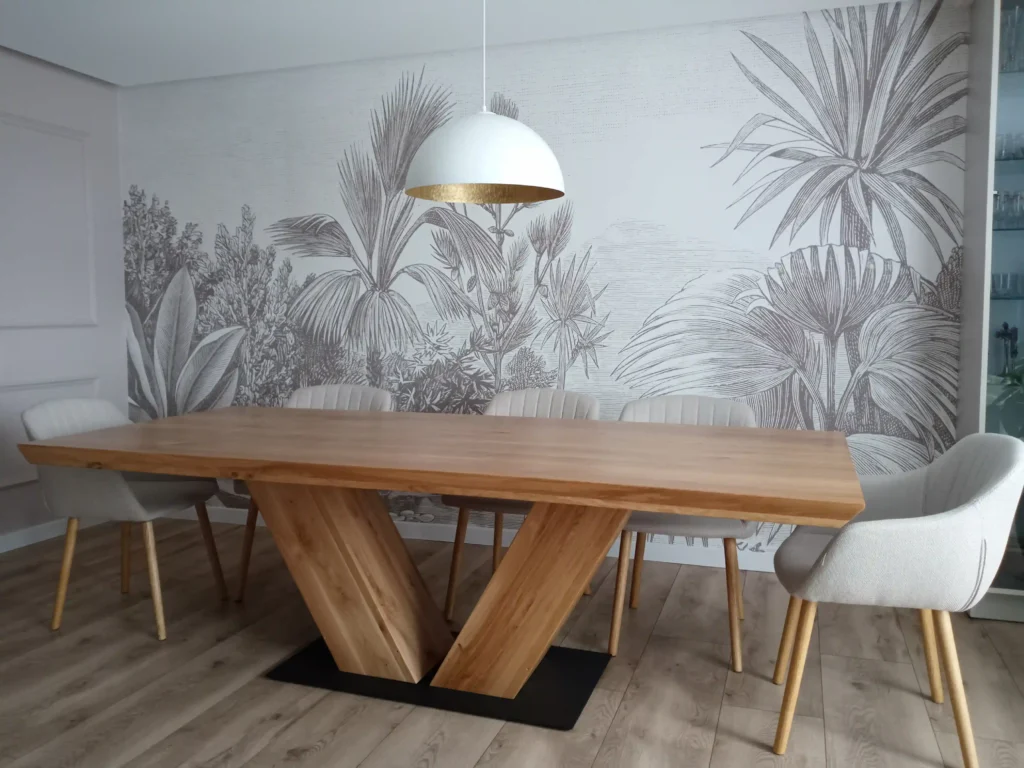
Oak dining table: how to choose the size, shape, and function so it matches the collection?
An oak table for the living room (or a combined living room + dining area) usually becomes the main visual focal point, so it should match your collection primarily through the base (legs) and the wood tone. It’s best to choose the table in this order:
Table base
A metal base fits loft/modern interiors better (e.g., MERIS, DELIO, VITA), while a wooden base suits scandi/japandi (e.g., NESS). This is the most important stylistic “connector” — even more than the tabletop itself.
Function (everyday use vs. guests)
If you often host guests, choose an extendable oak table or a table with extension leaves. That way you don’t overcrowd the space day to day, but you gain extra seating when needed.
Shape (ergonomics and a “softer” interior)
A rectangle is the most universal for classic layouts, while a round/oval table “softens” the arrangement and can be especially beneficial in smaller living rooms where easy circulation matters.
Dimensions (real comfort)
Instead of guessing, plan the space for chairs and walking paths. If your layout is unusual or you want a perfect tabletop length, consider a custom-made table or sizing it precisely to a specific zone.
Go to category: oak tables.
The living room “framework” and premium touches: display cabinets, NEMIR bar cabinets, and characterful shelving
For a living room to feel cohesive, you need a well-planned base: storage (a sideboard), order in the TV zone (a TV unit), and smart display (a shelving unit/display cabinet). Only then is it worth adding 1–2 pieces that create a “wow” effect and elevate the room’s prestige.
Base: categories that most often build a cohesive set
oak sideboards for the living room, TV units, oak shelving units, display cabinets for the living room.
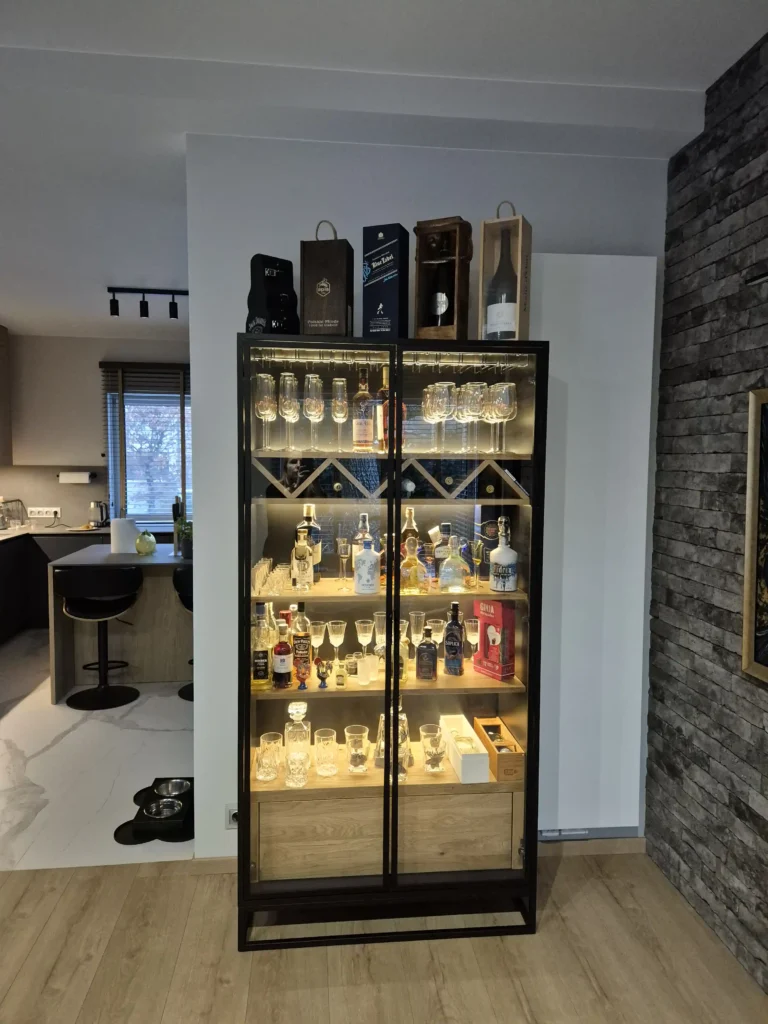
Touch #1: liquor display cabinet and bar cabinet (NEMIR) — a premium home zone
Instead of a random shelf for bottles, choose a piece designed for display: dividers, glass storage, drawers for accessories. It’s a detail guests notice immediately, and it helps keep things tidy. See: the NEMIR collection and specific models: NEMIR liquor display cabinet, NEMIR designer oak bar cabinet, NEMIR II display cabinet/bar. You can compare more options in the category: alcohol bar cabinets.
Touch #2: a shelving unit as a “gallery” — it displays not only objects, but your character
A shelving unit can tell your story: books, vinyl records, ceramics, artwork, travel souvenirs. To make it feel premium, use the 60/40 rule: about 60% of shelves filled, 40% as breathing room (empty space looks “high-end”). A good mix is: some open (display) and some closed (tidy storage). See shelving units: oak shelving units for the living room.
Touch #3: one strong “statement” instead of many decorations
Instead of ten small décor items, choose one standout piece: a glass-front display cabinet, a bar cabinet, a tall sideboard, or a shelving unit with a bold form. Keep the rest calm and consistent within the same line (collection + finish). That’s how you create the impression of coherence and high quality.
Oak stain and finish: how to keep colors consistent?
Cohesion comes not only from the shape of the furniture, but also from the wood color. If you’re combining multiple pieces (TV unit + sideboard + table), stick to one oak shade—or a very close tone. Finish also matters (oil vs. lacquer), and it’s worth matching it to how the furniture will be used.
Helpful links worth adding in the article (and in CTAs): colors & finishes, oak stain samples, furniture care.
Custom-made furniture and projects: how to close the design with zero compromises?
If you have an unusual niche, a short TV wall, sloped ceilings, or you want to match the sideboard length perfectly to your sofa, custom furniture is the simplest path to a true “designed” look. At RaWood you can adjust the dimensions, color, and configuration of many models, or order a piece built for a specific space.
Summary: how to design a living room with oak furniture in 3 steps
Choose a base collection (VITA, MERIS, NESS, DELIO, NESCA) and build the core: sideboard + TV unit + shelving/display cabinet.
Choose an oak table based on the base style and function (everyday / guests) — if needed, go for extendable or custom sizing.
Add prestige with one “signature” piece: a NEMIR display cabinet/bar or a statement shelving display, and keep everything in one consistent stain tone.
If you want to move to specific shopping steps: oak tables, oak sideboards, TV units, display cabinets, shelving units.