Solid Wood Tabletops

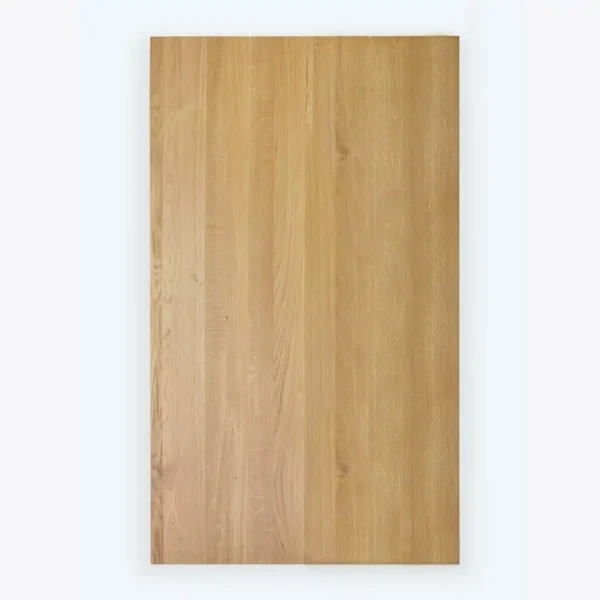
Solid Oak Tabletop – Lacquered or Oiled, Straight Edges
Price range: 1750 zł through 3600 zł
Lacquered or Oiled Oak Tabletop with Undercut Swiss Edge
Price range: 1850 zł through 4000 zł
Unfinished Oak Tabletop with Straight Edges
Price range: 1550 zł through 3000 zł
Unfinished Oak Tabletop with Bevelled Edge
Price range: 1650 zł through 3200 złGuides about Solid Wood Tabletops

Bespoke solid oak office furniture — how to design a desk, bookcase and chest of drawers for a specific space
An office furnished with standard catalogue furniture often creates the same problem: something does not quite fit. The desk may
Read the guide
Solid oak drinks cabinet – model comparison and how to choose a bar cabinet for the living room or study
A solid oak drinks cabinet brings bottles, glassware and accessories together in one dedicated piece of furniture instead of spreading
Read the guide
A solid oak display cabinet for the office and study – what to display, how to choose and which RaWood models are worth knowing
A bookcase displays. A chest of drawers stores. A display cabinet can do both at once — and that is
Read the guideSolid wood tabletops for tables, desks and furniture projects
Solid wood tabletops are chosen when the timber surface itself should remain visible and become a structural part of a table, desk or furniture project. This category includes oak tabletops and selected ash variants, so the exact timber, edge profile, surface finish and available construction must be checked on the individual product page. The support and fixing method are as important as the appearance of the top because the surface and the structure below it have to work together.
An oak top can be the right choice when natural grain and the wider RaWood oak furniture palette are important; an ash variant creates a different material direction. If you are planning a complete table rather than a separate top, compare solid oak tables. For a complete workspace, start with wooden desks for home and office. This keeps the category focused on the tabletop itself rather than on complete furniture.
A solid wood tabletop needs the right support and construction
An oak tabletop for a table should be matched to the legs or frame rather than treated as an independent slab. The spacing of supports, the way the top is fixed and the final use all influence the correct construction. A larger surface requires particularly careful support, while a desk may need a different relationship between the working area and the structure underneath. In kitchen or fitted-furniture applications, accurate installation and protection of areas exposed to moisture become especially important. The same material can therefore work in several applications, but the details should follow the real use rather than one universal specification.
The edge also changes how the top looks and how heavy it appears visually. RaWood offers variants with a straight edge as well as more visually reduced undercut forms, and the right direction should be chosen together with the base and the character of the furniture. A simpler straight edge can suit a calmer or more substantial construction, while an undercut edge can make the top appear lighter. If the project requires a non-standard shape, openings or cut-outs, those elements should be assessed together with the support and intended use rather than added after the basic top has already been selected.
Timber, edge profile and finish should follow the intended use
Oak tops differ not only in grain and edge profile but also in surface finish. Raw variants are intended for further finishing and should not be treated as ready for normal everyday use without appropriate protection. Oiled oak keeps a more direct visual relationship with the timber and allows periodic maintenance, while lacquer creates a more closed protective layer and can make routine cleaning easier. The best option depends on where the top will be used, the appearance you want and how much maintenance you are prepared to carry out later.
Because oak is a natural material, colour should also be judged in the actual interior. Daylight, artificial lighting, flooring and nearby furniture can make the same finish appear different from a screen image. Before choosing the tone, compare oak wood samples and finishes in the room where the top will be installed. A physical sample is particularly useful when the tabletop needs to coordinate with an existing floor, kitchen front, table base or other RaWood furniture.
Product-level links are particularly useful here because edge and finish change the choice materially. Compare the lacquered or oiled oak top with Swiss edge, the unfinished oak top with bevelled edge, the unfinished oak top with straight edges, and the lacquered ash tabletop with natural edges. The ash option is also an important reminder that this hub should remain broader than an oak-only material claim.
The support structure and the final use should be planned before the top is ordered
A tabletop is only one part of a table, desk or custom furniture project. Its intended use affects the sensible proportions, support and edge treatment. A top that works on a dining table may need a different relationship with the base than one used for a desk or fixed work surface.
Before finalising the timber and finish, check how the top will be supported, where people will sit or work and which edges remain visible. Those decisions are part of the project rather than details to solve after the top arrives.
When a standard solid wood tabletop does not fit the project
When a standard top does not suit the construction or available space, use tabletop customisation. A useful enquiry should describe the application, the supporting structure and the result you want to achieve. Depending on the project, the discussion may include proportions, shape, edge treatment, finish and necessary openings or cut-outs, but the available scope should always be confirmed for the specific use. If the top is intended for an existing metal frame, wooden legs or fitted unit, information about the support is especially important because the tabletop and the structure below it have to work together.
The category itself should remain focused on ready solid wood tabletops and the material choices around them, while genuinely made-to-measure requirements should be handled through the dedicated customisation route. This gives a clearer buying path: compare the available oak-top variants first, decide whether raw, oiled or lacquered finishing is appropriate, check the edge and material in your own interior, and move to customisation only when the standard options do not solve the project. That approach protects both the practical quality of the finished piece and the visual proportions of the furniture built around it.
Frequently asked questions about solid wood tabletops
Can the same oak tabletop be used for a dining table and a desk?
The intended use changes the appropriate proportions and support, so the whole construction should be planned rather than the top alone.
How should I choose the finish?
Compare the available finish with the expected use, maintenance and the surrounding interior. Exact options depend on the selected product or project.
When does a custom tabletop make sense?
When a standard size or edge treatment does not work with the intended base, room or furniture construction.
Should the base be chosen before the tabletop?
They should be planned together because support, seating and visual proportion all depend on the relationship between both parts.